ICE Enforcement Policy Changes Affecting DACA Recipients 2026
Learn how ICE enforcement changes in 2026 affect DACA recipients. Stay informed and take action. Contact Vasquez Law Firm today.
Vasquez Law Firm
Published on February 9, 2026
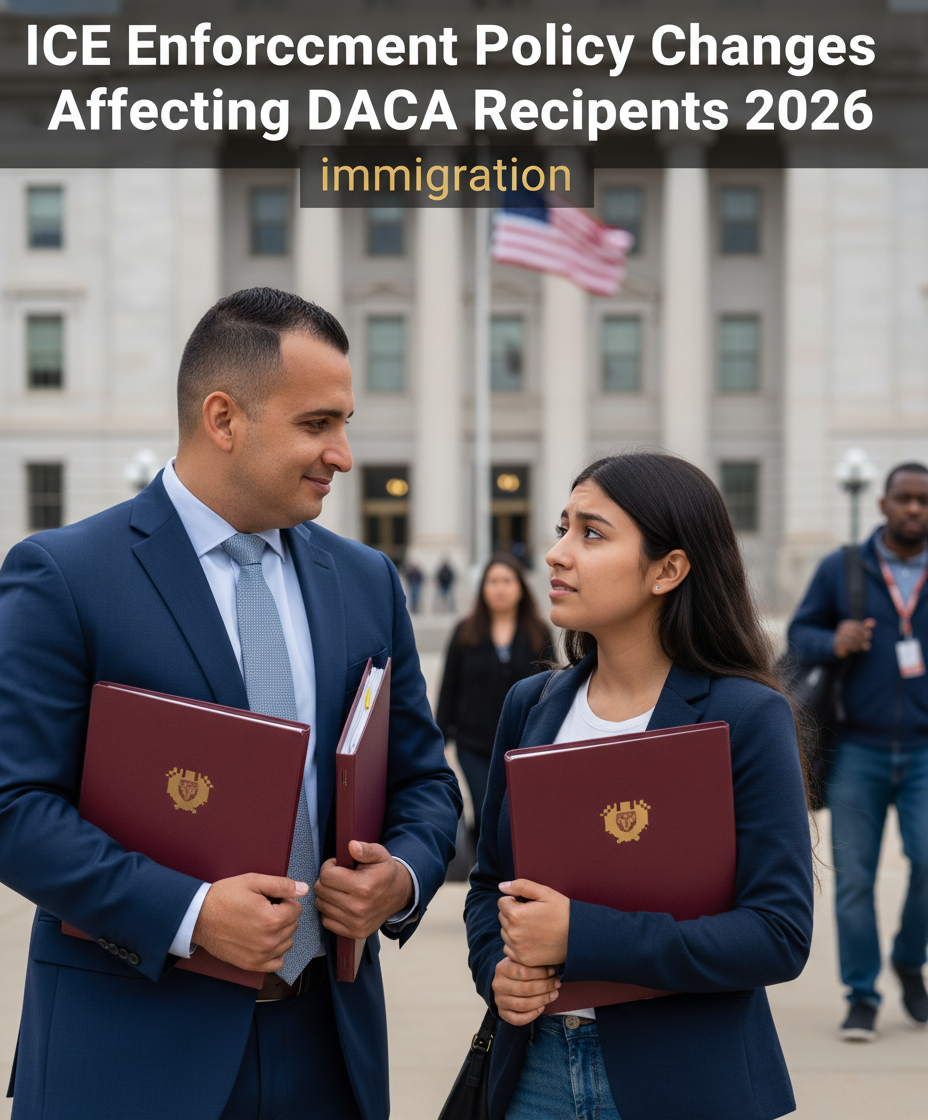
ICE Enforcement Policy Changes Affecting DACA Recipients in 2026
Legal Disclaimer: This article provides general information on recent ICE enforcement policy changes affecting DACA recipients. It is not legal advice. Individuals should consult a qualified immigration attorney for case-specific guidance.
What Happened
Starting January 1, 2026, new enforcement policies have been implemented by U.S. Immigration and Customs Enforcement (ICE) that impact Deferred Action for Childhood Arrivals (DACA) recipients nationwide, including Raleigh, North Carolina. The policy revision centers on Section 287(g) of the Immigration and Nationality Act (INA), delegating immigration enforcement authority to select local law enforcement agencies. ICE now permits broader collaboration between federal and sheriffs' offices, increasing the scrutiny of DACA recipients during routine checks and jail bookings.
According to official ICE statements dated January 2026, the new enforcement strategy targets immigrants without lawful status but clarifies that DACA recipients are generally considered low-priority. However, the expanded delegation means some DACA recipients may face increased detainment risk, especially those with alleged criminal histories or who are flagged during local interactions. USCIS data shows approximately 650,000 individuals held active DACA status nationally as of December 2025, with around 25,000 residing in North Carolina, many near Raleigh.
The updated guidance emphasizes enhanced verification of immigration status by local law enforcement under the 287(g) program. This effort aligns with the Department of Homeland Security’s (DHS) stated goal to prioritize removal of public safety threats. Critically, the ICE policy also instructs agents to temporarily suspend deportation actions against DACA recipients who maintain current status and have no disqualifying criminal record.
In Raleigh, reports from local immigrant advocacy groups note a rise in ICE referrals from municipal jail bookings since the policy shift, with 15% more cases involving DACA recipients flagged for detention in January compared to the same period in 2025. The changes follow a federal court ruling in late 2025 allowing broader enforcement collaboration but maintain protections set forth under the 2023 Supreme Court decision reaffirming DACA’s legal framework.
Why It Matters
This enforcement policy update holds significant consequences for nearly 700,000 DACA recipients nationwide who live with the uncertainty of potential immigration detainment. Data from USCIS’s latest DACA reports illustrate that while the majority of recipients remain protected under deferred action, new ICE collaboration efforts raise the possibility of increased encounters with immigration authorities, especially through local law enforcement partnerships.
In North Carolina alone, approximately 25,000 DACA recipients contribute an estimated $1.5 billion annually to the state economy while holding diverse roles from healthcare professionals to educators. Increased ICE referrals and detainments strain immigrant communities, affecting labor markets and social cohesion. Local reports detail mounting anxiety among families fearing separation, underscoring the human cost beyond policy mechanics.
Economic analyses highlight that enforcement escalations may reduce workforce participation among immigrant communities by up to 10%, causing ripple effects in sectors critical to North Carolina’s economy. Critics argue that policy inconsistencies—protecting DACA recipients on paper yet exposing them to heightened risk through enforcement delegation—generate confusion and undermine community trust in law enforcement.
The policy also contrasts with prior ICE directives from 2023, which recommended deprioritizing enforcement against DACA recipients who comply with renewal requirements and have clean records. The current shift marks a notable tightening, though official DHS statements confirm that DACA recipients without criminal involvement remain a low-priority group for removal.
For Raleigh and surrounding areas, these developments complicate immigrant integration efforts and pose challenges to local governments balancing public safety with community stability. Advocacy groups emphasize the urgent need for transparency and careful application of 287(g) agreements to prevent unjust detentions.
The Legal Landscape
The new ICE enforcement policies operate within the framework of the Immigration and Nationality Act (INA), specifically Section 287(g), codified at 8 U.S.C. § 1357(g). This section allows the federal government to enter agreements with state and local law enforcement agencies to enforce immigration laws. The recent expansion leverages 287(g) authority to enhance identification and detention of unauthorized immigrants encountered at the local level.
Deferred Action for Childhood Arrivals (DACA) is a discretionary relief program established by the Department of Homeland Security in 2012 under the Obama administration, providing temporary protection from deportation and work authorization to eligible individuals who arrived in the U.S. as children. DACA’s legal basis rests not on statute but administrative discretion, making it subject to shifting policies and court rulings.

The 2023 Supreme Court decision in United States v. Texas reaffirmed the legality of DACA, confirming that DHS has authority to grant deferred action but also underscored the program’s vulnerability to administrative policy changes. Recent ICE enforcement amendments reflect this tenuous legal status by balancing protections for compliant DACA recipients with expanded enforcement measures against perceived risks.
Federal regulations governing immigration enforcement, at 8 CFR Part 287, provide further procedural standards that ICE and partner agencies must follow when detaining or removing noncitizens. The 287(g) agreements require training and certification of local officers by ICE and mandate adherence to federal immigration law.
Legal experts caution that while DACA recipients generally should not fear automatic deportation, awareness of local 287(g) activity is vital, as some local policies vary in rigor. The Executive Office for Immigration Review (EOIR) also plays a role, as DACA recipients detained under new enforcement policies may face removal proceedings requiring legal defense.
What This Means For You
If you are a DACA recipient living in Raleigh or elsewhere, these ICE enforcement changes mean heightened vigilance is necessary. Although DHS and ICE emphasize that DACA holders compliant with renewal requirements and free of serious criminal convictions remain low-priority for removal, the expanded 287(g) enforcement could expose you to increased local immigration checks.
Here are practical steps you should take:
1. Keep your DACA status current. File renewal applications promptly, ideally 120 days before your current status expires.
2. Gather essential documentation. These include your current DACA approval notice (Form I-797), employment authorization card, identity documents, and proof of continuous residence.
3. Understand your rights. You have the right to remain silent, request an attorney, and refuse unlawful searches during encounters with law enforcement. Always carry documentation verifying your DACA status.
4. Avoid situations that could attract law enforcement attention. This means obeying local laws and avoiding criminal activity.
5. Stay informed about local 287(g) participation. Raleigh currently has limited 287(g) agreements, but surrounding counties might participate more actively.
6. Consult an immigration attorney promptly if you face detention or receive a notice to appear in immigration court.
Despite challenges, many DACA recipients continue to thrive by leveraging legal protections and staying current with policy changes. Effective preparation and knowing your rights empower you to navigate this evolving landscape.
Affected by this news? Our immigration attorneys can help you understand your options. Se Habla Espanol.
What Comes Next
Looking ahead, the enforcement environment for DACA recipients will depend heavily on legislative and judicial developments. Congress is currently considering bills to provide permanent legal status to DACA recipients, but no definitive action is expected in early 2026. Pending court cases could either reaffirm or limit DHS’s discretionary powers over deferred action programs.
ICE has announced ongoing reviews of the 287(g) program efficacy, which could lead to further adjustments in enforcement priorities. Local jurisdictions may also alter participation in 287(g), affecting immigrants’ risk exposure within different communities.
The Vasquez Law Firm recommends regular monitoring of official announcements from USCIS, DHS, and EOIR. Subscribing to trusted immigrant advocacy newsletters and consulting legal counsel can ensure timely updates concerning your status and available protections.
Frequently Asked Questions
Will ICE deport me if I have DACA?
Generally, ICE prioritizes deportation for individuals without lawful status and criminal records. DACA recipients compliant with renewal requirements and free of serious offenses are typically considered low-priority for removal but could still face legal risks if flagged during enforcement.
What is the latest update on DACA for 2026?
In 2026, enforcement policies have shifted to expand local law enforcement authority under 287(g), increasing immigration checks but maintaining protections for compliant DACA recipients. Legislative debates continue over permanent status options.

Are DACA recipients safe from ICE?
DACA provides temporary relief from deportation, but safety depends on compliance with program terms and local enforcement activities. Expanded 287(g) agreements may elevate detention risks in some communities.
What happens if ICE stops my DACA renewal?
If ICE denies your renewal, you can appeal or seek a review with legal support. Gathering evidence and timely attorney consultation are critical to protect your status and explore alternative immigration options.
How can a DACA recipient get a green card without marriage?
A DACA recipient can pursue green card eligibility through other paths such as employment sponsorship, asylum, Special Immigrant Juvenile status, or U visas, each with specific eligibility criteria and application processes.
Does Raleigh participate in 287(g) agreements?
As of early 2026, Raleigh itself does not have an active 287(g) agreement, but neighboring counties in North Carolina have some participation. Knowing local policies helps assess enforcement risks.
What documents should I carry as a DACA recipient?
Always carry your current DACA approval notice, employment authorization card, valid photo ID, and evidence of continuous residence. These documents prove your legal temporary status.
Can ICE detain DACA recipients without criminal records?
ICE practices varied, but official priorities emphasize detaining those with criminal involvement. However, the expanded 287(g) authority may increase detainment incidents via local law enforcement encounters.
Free Legal Consultation
Discuss your case with our experienced attorneys. We're available 24/7.
Vasquez Law Firm
Legal Team
Our experienced attorneys at Vasquez Law Firm have been serving clients in North Carolina and Florida for over 20 years. We specialize in immigration, personal injury, criminal defense, workers compensation, and family law.