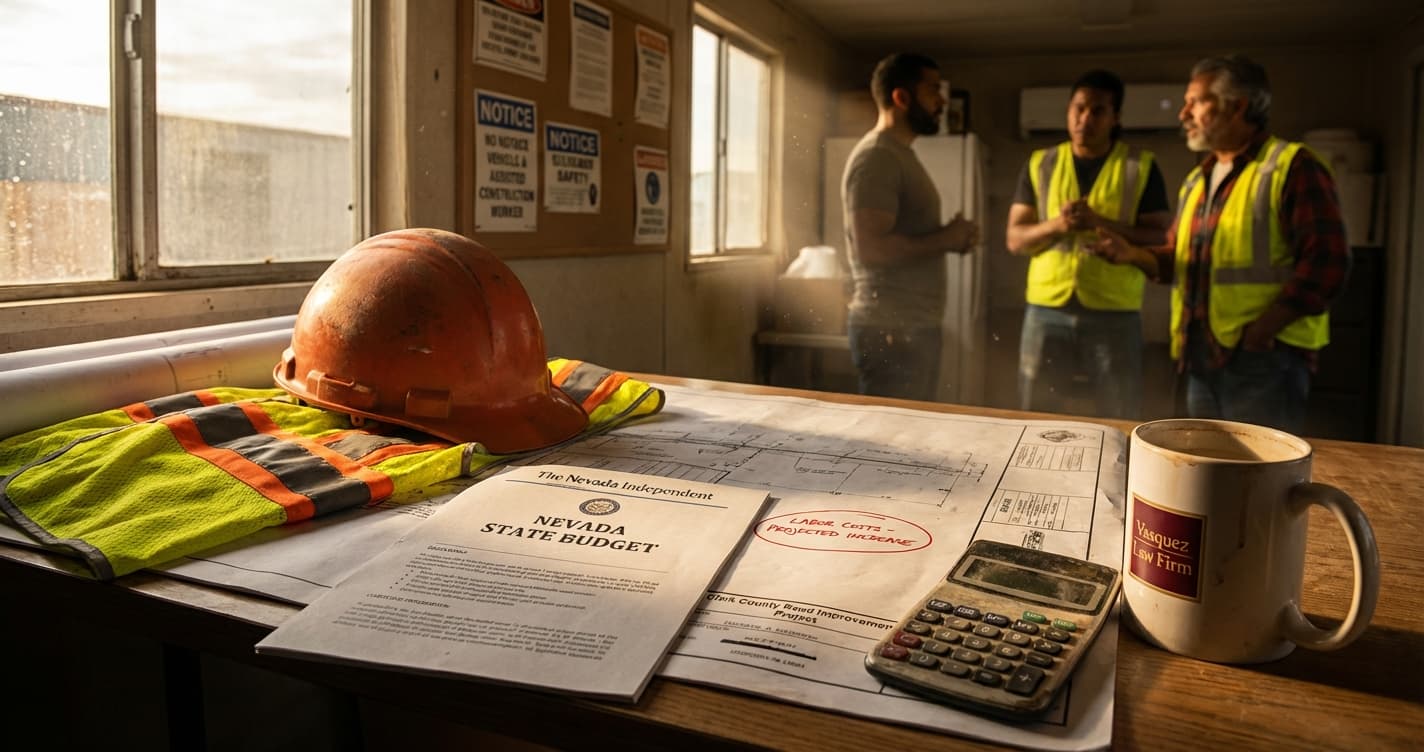
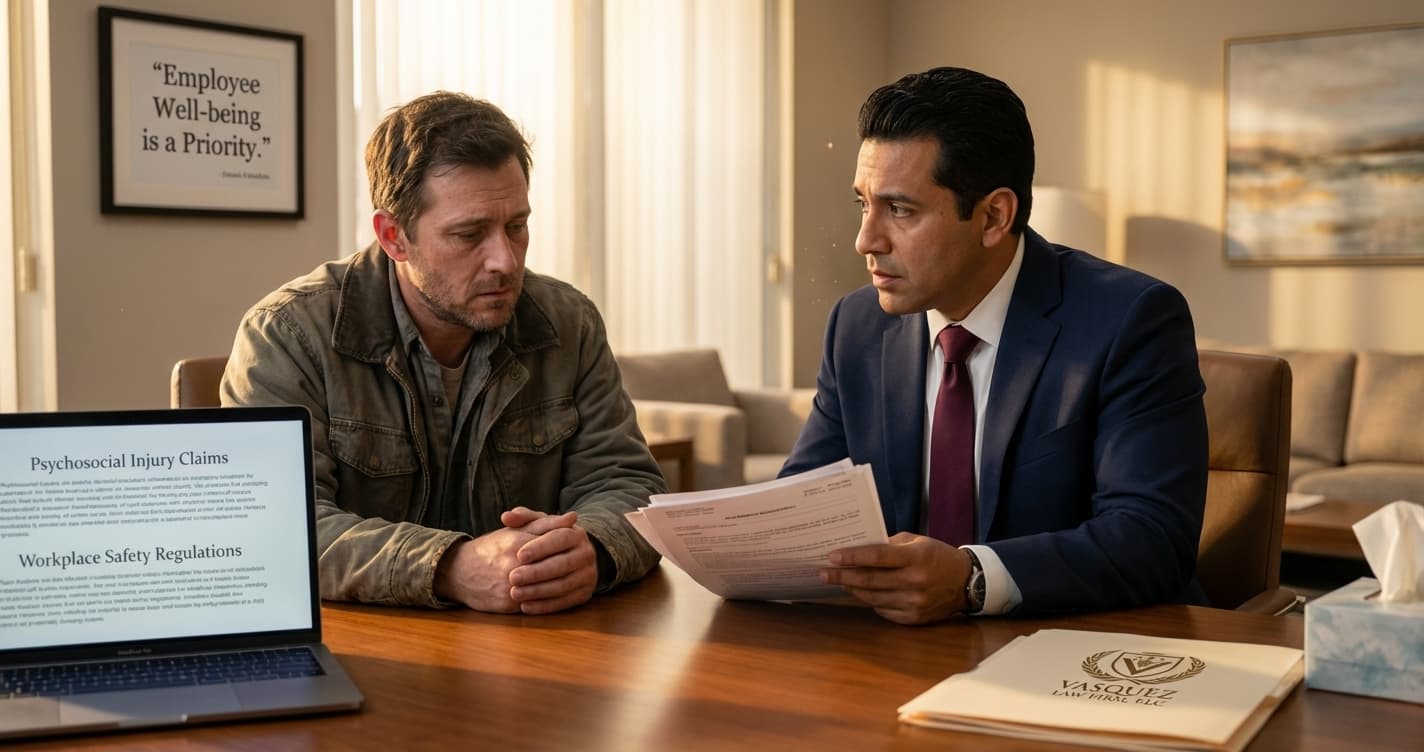
workers compensation lawyer NC: The Truth Behind 2025 Sports Law
workers compensation lawyer NC explains what 2025 sports-law cases reveal about denied injury claims—protect your benefits. Se Habla Español. Call 1-844-967-3536.
Vasquez Law Firm
Published on December 24, 2025
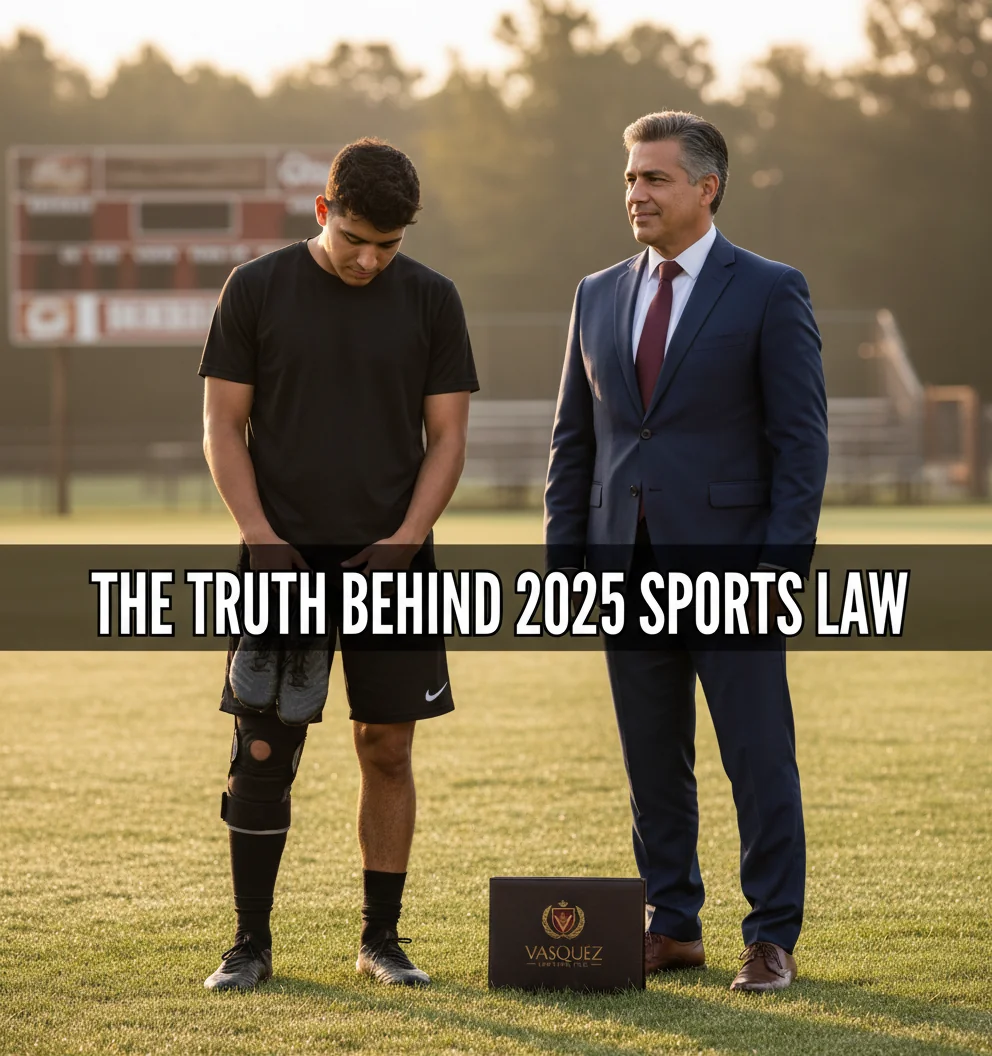
workers compensation lawyer NC: The Truth Behind 2025 Sports Law
If you were hurt at work in North Carolina, the most important question is often not “How bad is my injury?” It’s “Do they call me an employee—or try to label me something else?” The 2025 sports-law court battles spotlight how fast employers and insurers can shift blame, deny coverage, and argue you’re not eligible. A workers compensation lawyer NC can spot these tactics early and protect your benefits.
Quick Summary (Read This First)
What happened: 2025 sports-law cases highlighted major fights over worker status, injury responsibility, and who pays when someone gets hurt while “working.”
Why it matters to you: The same arguments used in sports (employee vs. contractor, “outside the job,” waiver language) are used to deny North Carolina workers’ comp claims every day.
What to do now: Report the injury in writing, get medical care, and start a paper trail that proves the injury is work-related before the story gets rewritten.
What This News Means for North Carolina Residents
The article on the court cases that defined sports law in 2025 is not “just sports.” Sports disputes often become public examples of a quiet legal fight that also hits warehouse workers, nurses, truck drivers, construction crews, and restaurant staff: who counts as an employee, what counts as “in the course of employment,” and what paperwork decides the outcome.
Why sports cases spill into everyday workers’ comp
Sports organizations often use contracts, waivers, and “independent contractor” language. Many non-sports employers do the same. If an insurer can argue you were not an employee—or that you were doing something “personal” when you got hurt—benefits can be delayed or denied.
The status fight: employee vs. contractor
In North Carolina, misclassification is a common pressure point. A workers compensation lawyer NC will typically focus on facts like control, scheduling, training, and who provides tools—because those details are what insurers use to argue you do not qualify.
The work-related injury fight: “It didn’t happen at work”
Sports cases often involve travel, training, and off-site events. In regular jobs, it’s business travel, company vehicles, job sites, and “off the clock” tasks. Disputes often hinge on documentation: when you reported it, who you told, and what medical notes say.
What to Do in the Next 24-48 Hours

1) Lock in your report while details are fresh
In many denied claims, the “real” fight starts before any form is filed. It starts with what gets written down on day one.
2) Get medical care and describe the mechanism clearly
Tell the provider exactly how you were hurt and that it happened at work. Small wording changes can cause big disputes later.
3) Preserve evidence that employers often ‘lose’
Save schedules, texts, shift assignments, incident logs, and the names of anyone who saw the injury or your symptoms.
If this situation applies to you, take these steps NOW:
- Step 1: Document everything—photos, names, dates, shift info, and a short timeline of what happened.
- Step 2: Report the injury to your supervisor/HR in writing (email/text is fine). Keep a copy.
- Step 3: Get medical care and make sure your provider notes the injury is work-related and lists the correct body parts.
- Step 4: Consult with a legal expert to understand your rights and options
Warning Signs & Red Flags to Watch For
Red flag #1: You’re suddenly called a “contractor” after you’re hurt
This is the sports-law playbook: control your work like an employee, then label you as a contractor when the bill comes due.
Red flag #2: You’re told “we’ll handle it” but nothing is filed
Delays create gaps. Gaps create denials. If time passes and you do not see claim activity, treat that as a warning.
Red flag #3: Pressure to return before medical clearance
Returning too early can worsen the injury and can be used later to argue you were not really hurt.
These are signs your case may be in jeopardy:
- Your employer is pressuring you to return to work before your treating doctor clears you.
- The insurance carrier is delaying benefits, requesting repeated paperwork, or “misplacing” medical notes.
- You’re being told you don’t qualify because you’re part-time, seasonal, paid cash, or labeled a contractor.
Seeing these signs? Vasquez Law Firm, PLLC has handled hundreds of denied claims in North Carolina. Attorney Vasquez knows the tactics insurers use. Get a free case evaluation.
Your Rights: What You CAN and CANNOT Do
Medical treatment and doctor rules in NC
Workers’ comp medical care is often managed through the employer/insurer’s “authorized” provider network. Problems start when workers do not understand what is authorized and what is not.
Wage replacement and work restrictions
If you cannot work or have restrictions, your doctor’s note and the employer’s ability (or refusal) to accommodate restrictions matters.

Protection from retaliation (with practical limits)
Retaliation claims can exist in certain situations, but workers’ comp is a separate system with its own rules and deadlines.
YOU HAVE THE RIGHT TO:
- Request workers’ compensation benefits for a work-related injury or occupational disease (including repetitive trauma when supported by medical evidence).
- Receive necessary medical treatment that is reasonably required to effect a cure, provide relief, or lessen disability (subject to authorization rules).
- Dispute a denial and request a hearing at the North Carolina Industrial Commission.
YOU CANNOT:
- Assume verbal notice is enough—late or undocumented notice can damage your claim.
- Ignore deadlines or skip medical appointments—gaps in care are often used to argue you recovered or were never injured.
Vasquez Law Firm, PLLC helps North Carolina clients understand and protect their rights every day.
Documents You'll Need (Save This Checklist)
Proof the injury happened and was reported
Think like an insurer: if it is not written down, they may claim it did not happen.
Medical proof tying the condition to work
Sports disputes often turn on medical causation (concussions, overuse injuries). So do many workers’ comp claims (back injuries, shoulder tears, carpal tunnel).
Wage records to calculate disability checks
Pay stubs and hours matter. Misstated wages can reduce benefits even when the claim is accepted.
Gather these documents NOW (before they disappear):
- Written injury report or email/text to a supervisor (and any response).
- All medical records, work notes, restrictions, imaging results, and bills.
- Photos of the hazard/scene, equipment, and visible injuries (if applicable).
- Witness names and contact information (coworkers, clients, vendors).
- Pay stubs and a recent work schedule showing your usual hours and rate.
Tip: Keep all documents organized in one folder - it makes the process much easier.
KEY TAKEAWAY:
In North Carolina, a “status dispute” (employee vs. contractor) can sink a claim even when the injury is real. Your best defense is fast written notice, consistent medical documentation, and evidence showing the employer controlled your work.
Legal Background and Context
North Carolina workers’ comp is an administrative system
Workers’ compensation claims are handled through the North Carolina Industrial Commission, not regular civil court. That structure is one reason sports-law disputes can feel familiar: both areas involve specialized rules, decision-makers, and strict procedures.
Key North Carolina statutes that often control the outcome
Several provisions of the North Carolina Workers’ Compensation Act come up repeatedly in real cases:
- N.C. Gen. Stat. § 97-22: notice to the employer (late notice becomes a common denial argument).
- N.C. Gen. Stat. § 97-24: time limits for filing a claim with the Commission (missing the statute of limitations can bar benefits).
- N.C. Gen. Stat. § 97-25: medical compensation (what treatment is covered and when).
- N.C. Gen. Stat. § 97-29 and § 97-30: wage replacement for total or partial disability.
Forms you may hear about (and why they matter)
North Carolina claims frequently involve standardized forms. Many workers first learn about them only after a denial.
- Form 18: the employee’s formal notice/claim filing.
- Form 19: employer’s report of injury (not a substitute for the worker protecting their own filing).
- Form 60 / Form 63: acceptance of the claim (full acceptance vs. acceptance with conditions).
- Form 61: denial (often triggers the need for fast, organized response).
For official guidance and rules, the Commission’s resources are a strong starting point: NCIC workers’ compensation information.
How Vasquez Law Firm, PLLC Helps North Carolina Clients Win These Cases
We build the “employee” proof when insurers try to misclassify you
One clear lesson from sports-law disputes is that labels are not facts. When a carrier argues “contractor,” we focus on what really happened: supervision, schedules, required meetings, training, performance discipline, and who controls the work.
We connect medical evidence to work the right way
Many denials come down to one sentence in a medical record. A workers compensation lawyer NC can spot gaps in causation language and help present your medical timeline clearly and consistently.
We manage deadlines and procedure at the Commission
Workers’ comp is paperwork-heavy. Missed deadlines and missing forms are preventable problems, but they still derail claims every week.
Our experienced team, led by Attorney Vasquez, has helped hundreds of North Carolina clients. Here's exactly how we help:
- Step 1: We review your case for free and tell you honestly if you have a claim
- Step 2: We handle all paperwork and deadlines so nothing gets missed
- Step 3: We fight insurance tactics - we know their playbook
- Step 4: We maximize your settlement or take it to hearing if needed
Real example: "We recently helped a Charlotte construction worker whose claim was denied. Insurance said his injury 'wasn't work-related.' We gathered evidence, fought the denial, and won him $45,000 in benefits plus ongoing medical care." - Attorney Vasquez

Attorney Vasquez, JD, brings 15 years of experience and is admitted to the North Carolina State Bar and the Florida Bar. Se Habla Español.
Learn more about our Workers Compensation services and how claims move through the system.

Frequently Asked Questions (Specific to This Situation)
How do 2025 sports-law cases affect regular workers’ comp claims?
They highlight the same “denial themes”: worker classification fights, waiver language, travel/training injuries, and heavy reliance on documentation. Insurers in North Carolina use similar strategies in non-sports claims.
If I got hurt during work travel or training, can it still be covered in NC?
Often, yes—travel and training can be within the course and scope of employment depending on why you were there, who required it, and what you were doing. These are fact-specific disputes, similar to how sports cases analyze travel and required activities.
What if my employer points to a contract saying I’m an “independent contractor”?
In many cases, the label is not the end of the story. The real test focuses on working conditions and control. If the company sets your schedule, directs how you do the job, and can discipline you, those facts may support employee status even if the contract uses different words.
Should I give a recorded statement to the insurance adjuster after reading about these sports disputes?
Be careful. Recorded statements can lock you into wording that later gets used to argue the injury happened outside work or that symptoms started earlier. If your case involves travel, delayed symptoms, or repetitive trauma—common in sports cases—precision matters.
Do concussion-like symptoms or repetitive trauma claims get denied more often?
Yes, because insurers frequently challenge causation and timing. Like high-profile sports cases, these claims often turn on consistent medical documentation, witness accounts, and a timeline showing when symptoms started and how work activities contributed.
If my claim is denied, where is it actually decided in North Carolina?
Disputes are handled through the North Carolina Industrial Commission process (mediation, hearings, and potential appeals). This is not the same as filing a normal lawsuit in county court.
Which forms matter most when an insurer starts arguing “not work-related”?
Early written notice and a timely claim filing are critical. Form 18 is commonly used by injured workers to formally file. Medical work notes, restrictions, and records that clearly tie the injury to work activity can be just as important as the forms.
Don't Navigate This Alone
If you're dealing with a denied or delayed North Carolina workers’ compensation claim (especially misclassification or “not work-related” arguments), Vasquez Law Firm, PLLC can help. With 15+ years serving North Carolina, we know what works.
Free consultation. Bilingual team. No fees unless we win.
Call Now: 1-844-967-3536
Se Habla Español - Hablamos Su Idioma
Free Legal Consultation
Discuss your case with our experienced attorneys. We're available 24/7.
Vasquez Law Firm
Legal Team
Our experienced attorneys at Vasquez Law Firm have been serving clients in North Carolina and Florida for over 20 years. We specialize in immigration, personal injury, criminal defense, workers compensation, and family law.